The Quest for Blue Roses

Caroll Alvarado
| 19-10-2026
 · Plant Team
For generations, blue roses have captured people’s imaginations, yet creating one has been a difficult scientific challenge. Roses naturally produce a range of colors, but their biology makes a genuinely blue appearance difficult to achieve.
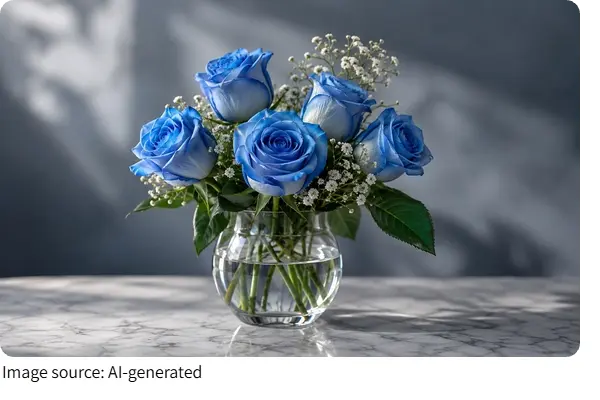
Researchers in Japan have now developed roses with a more pronounced violet-blue shade by combining pigment production with another important ingredient: nearly colorless molecules that help bring out the blue.
Why Blue Roses Are So Difficult to Create
Flower color depends largely on pigments, which absorb certain wavelengths of light and reflect others. One important group is anthocyanins, responsible for many red, purple, and blue shades in flowers.
A chance photo helped scientists locate a rare giant water lily in Colombia, with few plants left in the wild!
Eight-year study: sunlight, recycled nutrients, smarter greenhouses can transform sustainable food production.
Scientists found why some ecosystems thrive despite environmental threats, offering lessons for protecting nature.
White Tulips Hold Beautiful Meanings of Pure Love, Forgiveness, Respect, Elegance, and Memories That Stay With Us
Your Orchid Has Finished Blooming, but These Four Simple Care Steps Can Help It Flower Again Next Season
How Can We Keep Sunflowers Fresh Longer? Try These Simple Florist Tips for Brighter, Longer-Lasting Blooms
A blue pigment called delphinidin contributes to the color of several naturally blue flowers. Roses, however, do not naturally have the necessary biological machinery to produce this pigment in the same way. Traditional breeding alone has therefore struggled to create roses with a distinctly blue appearance.
The latest research takes a broader approach. Rather than concentrating solely on which pigment a rose can make, scientists investigated how other compounds within the petals influence the final color.
The Role of Helper Molecules
Some naturally blue flowers rely on compounds known as copigments to strengthen or adjust the appearance of their pigments. These compounds may be nearly colorless on their own, yet they can interact with colored molecules and make the resulting shade appear deeper or bluer.
One relevant group is called flavone C-glycosides. Roses do not naturally produce the combination of blue pigments and these helper compounds needed for the effect observed in certain blue flowers. To investigate whether the combination could work in roses, researchers at Suntory Global Innovation Center tested different pigment and copigment pairings. Their experiments showed that particular combinations could intensify blue coloration.
How Scientists Created the New Color
The researchers introduced four genes involved in producing the required compounds into a light pink rose. One gene helped the plant produce blue pigments, while three others supported the production of the colorless helper molecules. The resulting petals accumulated malvidin, a blue-related pigment derived from delphinidin, alongside a copigment called isoorientin. Together, the compounds produced flowers described as violet-blue.
The team also observed a relationship between copigment levels and color intensity: petals containing higher amounts of the helper compounds tended to appear bluer. The findings were presented at the 32nd International Horticultural Congress in Kyoto, Japan, in August 2026. The research demonstrates that flower color depends on more than the presence of a particular pigment. Interactions among different molecules also play an important role.
Testing Color Stability
Developing a striking flower color is only one part of the process. Researchers also need to determine whether that color remains consistent as plants grow under different conditions. The engineered roses maintained their violet-blue appearance during greenhouse testing in Japan over seven years. Field trials in Colombia also showed stable coloration over three years.
What This Means for Future Plant Research
The copigmentation approach could have applications beyond roses. Other ornamental plants may also lack the natural combination of pigments and helper molecules needed to produce certain colors. Understanding how these compounds interact could give researchers additional ways to develop new flower shades. Instead of focusing only on pigment production, scientists can investigate the surrounding chemistry that influences the final appearance.
The new violet-blue roses show how a deeper understanding of plant chemistry can help overcome natural limitations in flower color. By combining a suitable pigment with nearly colorless helper molecules, researchers achieved a shade that earlier efforts struggled to produce.
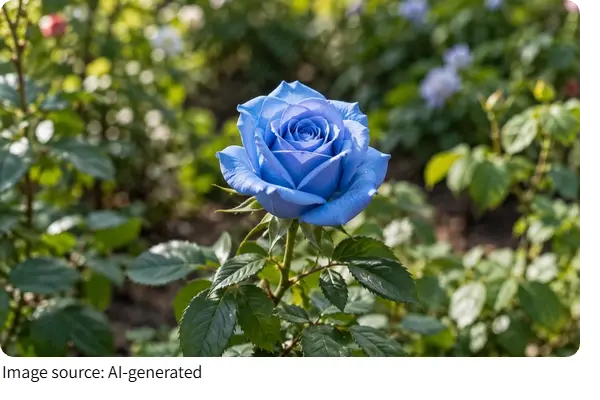
The result is not yet a perfectly pure blue rose, but it provides a useful direction for future work. More broadly, the research demonstrates that the colors seen in flowers emerge from complex interactions within their petals, opening new possibilities for ornamental plant development.