Rear Wing Performance

Caleb Ryan
| 16-09-2026
 · Auto Team
A rear wing is a functional aerodynamic component designed to influence how a performance car behaves at speed.
By directing airflow around its profile, it can increase rear-axle loading and support greater tire grip during demanding driving conditions.
Its effectiveness depends on careful engineering rather than size alone. The wing profile, angle, position, and interaction with the vehicle's other aerodynamic surfaces all determine its contribution to overall performance.
How a Rear Wing Works
A rear wing uses its aerodynamic profile to create a pressure difference between its surfaces, producing a downward force.
Unlike additional vehicle mass, aerodynamic loading increases with speed. This allows the wing to provide progressively greater tire loading as the vehicle travels faster.
Light controls, automatic transmissions, and clever design make scooters feel effortless!
How engine, exhaust, tires, aerodynamics, and cabin design shape a sports car's sound
How wheel and tire dimensions shape handling, comfort, efficiency, wet-road traction, and fitment
A professional guide to preparing your vehicle for heat, sand, dust, and remote terrain
How driving, road conditions, tire age, and maintenance influence tire longevity and performance
Leaving Your Car Parked for Too Long? Simple Storage Steps Can Help Prevent Battery, Tire, and Maintenance Problems.
The resulting increase in rear-tire loading can support traction and stability during high-speed cornering and directional changes.
Aerodynamic Balance
A vehicle's aerodynamic characteristics depend on the relationship between its front and rear sections. Increasing rear aerodynamic load changes that relationship and can influence steering response and cornering behavior.
For this reason, the rear wing is developed alongside components such as the front splitter, floor, diffuser, and bodywork. Their combined effect determines the vehicle's overall aerodynamic balance.
A wing that produces substantial load may therefore be unsuitable if it does not complement the rest of the aerodynamic package.
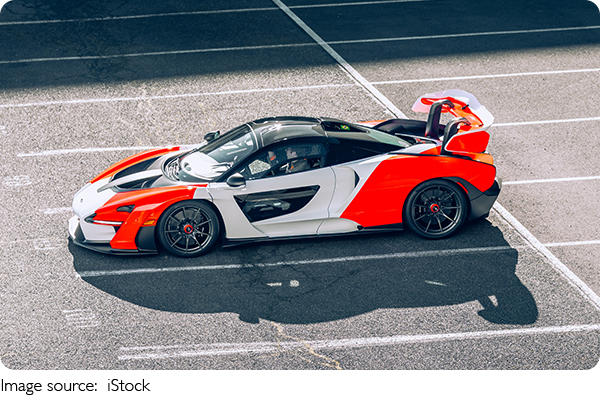
Wing Size and Geometry
The dimensions of a rear wing influence its aerodynamic potential, but surface area is only one design factor.
Engineers also evaluate the wing's profile, height, angle, and position. These characteristics determine how effectively it interacts with the airflow reaching the rear of the vehicle.
Position is particularly important because the surrounding bodywork can influence airflow quality. A carefully positioned wing can operate more effectively than a larger wing exposed to less favorable flow conditions.
Downforce and Drag
Aerodynamic load comes with a trade-off: generating greater downforce generally increases drag.
Higher aerodynamic load can support cornering performance, while lower drag can improve acceleration and straight-line speed. The preferred balance depends on the vehicle's purpose and the conditions in which it is expected to operate.
Effective aerodynamic design therefore seeks an appropriate relationship between load and resistance rather than maximizing either one independently.
Wing Angle
The angle of a rear wing relative to the airflow has a significant effect on its aerodynamic characteristics. Adjusting the angle can change both the aerodynamic load and drag produced by the wing.
However, increasing the angle does not automatically improve performance. The optimum setting depends on the wing's geometry, vehicle speed, airflow conditions, and the requirements of the complete vehicle.
Computer simulation, wind-tunnel development, and controlled vehicle testing can help engineers evaluate these variables and identify an effective configuration.
Integration With the Vehicle
A rear wing operates within a larger aerodynamic system. Airflow over the front bodywork and beneath the vehicle influences the conditions reaching the rear, while the diffuser and other surfaces affect how air leaves the car.
Changing one component can consequently alter the behavior of another. Aerodynamic development must therefore consider the entire vehicle rather than treating the rear wing as an isolated component.
This integrated approach helps engineers achieve a predictable relationship between aerodynamic load, drag, and vehicle response.

Engineering the Right Setup
The effectiveness of a rear wing is ultimately determined by how well it matches the vehicle's aerodynamic requirements.
A properly engineered design can increase rear-tire loading and contribute to high-speed stability, but its geometry and operating conditions must be considered alongside the rest of the car.
The goal is not maximum wing size or maximum aerodynamic load. It is a well-matched configuration that delivers the required performance while maintaining an effective balance between load, drag, and vehicle response.