Modern Scooters Feel Easy

Finnegan Flynn
| 20-09-2026
 · Auto Team
Modern scooters can feel surprisingly easy to ride, even for people who are new to two-wheelers. Their automatic transmission, comfortable riding position, and balanced design reduce the amount of work needed to control them.
But what exactly makes today's scooters so approachable on everyday roads?
Automatic Transmission Simplifies Control
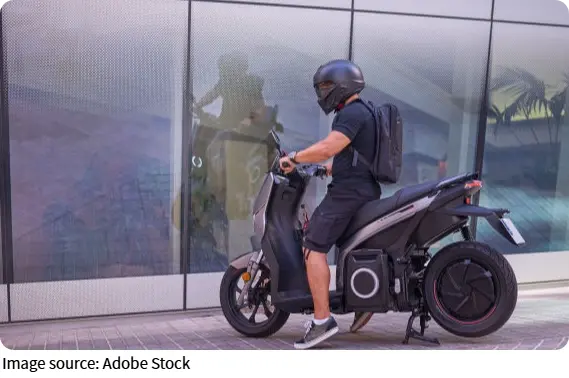
One of the biggest reasons scooters are easy to ride is the automatic transmission. Most modern scooters use a continuously variable transmission, commonly known as a CVT. Instead of asking the rider to select gears manually, the system adjusts the transmission ratio as speed changes.
This removes two tasks that can make motorcycle riding feel complicated: operating a clutch and choosing the right gear. The rider can concentrate more on steering, braking, traffic, and road conditions.
How engine, exhaust, tires, aerodynamics, and cabin design shape a sports car's sound
How wheel and tire dimensions shape handling, comfort, efficiency, wet-road traction, and fitment
A professional guide to preparing your vehicle for heat, sand, dust, and remote terrain
How driving, road conditions, tire age, and maintenance influence tire longevity and performance
Leaving Your Car Parked for Too Long? Simple Storage Steps Can Help Prevent Battery, Tire, and Maintenance Problems.
Should You Warm Up Your Car in Winter? These Situations Can Change How You Should Start and Drive Safely Outside.
The result is a smoother learning curve. New riders can become familiar with throttle and brake control without having to coordinate several controls at once.
A Low Seat Builds Confidence
Scooters generally have a relatively low and accessible seat compared with many motorcycles. This can make a noticeable difference when stopping at traffic lights, parking, or moving through crowded areas.
Being able to place both feet securely on the ground can give riders greater confidence at low speeds. It also makes mounting and dismounting easier for many people.
The riding position contributes as well. Scooters typically place the rider in an upright posture, giving a clear view ahead while keeping the controls within easy reach. This relaxed position is particularly useful during everyday commuting.
Light Steering Helps in Traffic
Another important factor is how scooters are designed around urban riding. Many models use relatively compact dimensions and a narrow body, allowing them to feel manageable when making turns or navigating slower traffic.
The handlebars provide direct steering control, while the overall layout keeps the rider's movements fairly simple. At low speeds, this can make ordinary tasks such as turning into a street or positioning the scooter at a stop feel less demanding.
That does not mean every scooter behaves exactly the same way. Wheel size, weight, suspension settings, and chassis design can all affect handling. Still, the basic scooter format is strongly focused on easy everyday control.
Braking Has Become More Predictable
Modern scooters also benefit from improved braking systems. Many models are equipped with disc brakes, while some include combined braking systems or ABS, depending on the model and market.
These technologies can help make braking more controlled. ABS, for example, is designed to reduce the chance of wheel lock during hard braking when traction conditions allow the system to operate effectively.
For newer riders, predictable braking can make the scooter feel easier to manage. However, electronic assistance does not replace good technique. Smooth brake application, appropriate speed, and awareness of road conditions remain important.
Electronic Features Reduce the Workload
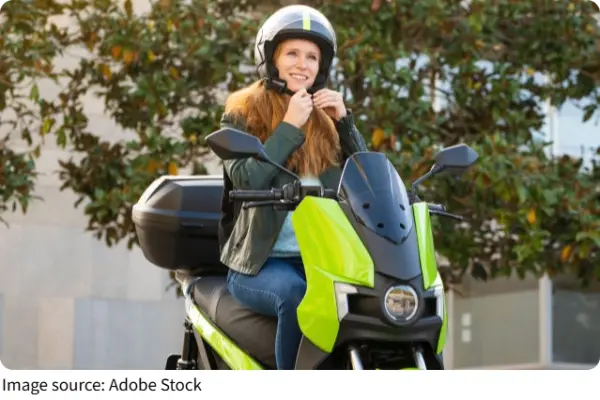
Technology has also changed the everyday scooter experience. Depending on the model, riders may find features such as traction control, riding modes, automatic engine stop-start systems, and digital displays. These features are not necessarily about making the scooter faster. Instead, many are designed to make operation smoother or more convenient.
For example, traction control can help manage excessive wheel slip under certain conditions, while a clear instrument display makes important information easier to monitor. Such features allow the rider to focus on the road rather than constantly adjusting the machine.
Small Details Make a Big Difference
The practicality of scooter design also contributes to its easy-going character. Step-through frames make getting on and off convenient, while under-seat storage can reduce the need for additional luggage during everyday trips. The engine and transmission are also packaged efficiently, helping create a compact layout.
Of course, ease of use should not be confused with effortless riding. Scooters still require proper steering, braking, throttle control, and awareness of surrounding traffic. Different road surfaces and weather conditions can also change how any two-wheeler behaves.
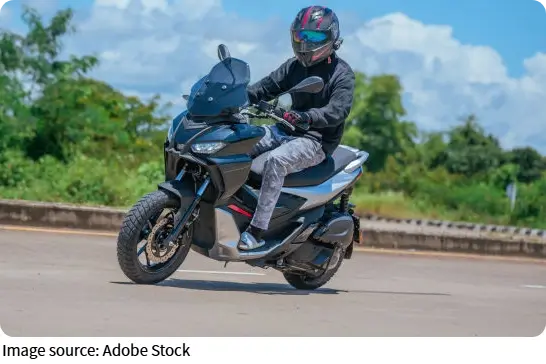
Modern scooters are easy to ride because their design removes much of the unnecessary workload. Automatic transmissions simplify acceleration, accessible seating improves confidence, and compact dimensions make low-speed handling more approachable. Better braking systems and electronic features add another layer of convenience. Put together, these elements create a two-wheeler that is straightforward to operate without removing the need for responsible riding.