Large SUV Design

Naveen Kumar
| 22-09-2026
 · Auto Team
A large SUV's exterior character comes from the relationship between its dimensions, cabin profile, wheels, lighting, and body surfaces.
Rather than relying on size alone, designers coordinate these elements to create a cohesive form with a clear visual identity.
Exterior design also serves practical requirements. Proportions, body architecture, and glass placement can affect interior packaging, visibility, passenger room, cargo capacity, and access.
Proportion Establishes the Form
Length, width, and height define the basic structure of a large SUV. Greater length can create a longer profile, while additional width gives the body a broader appearance. Height establishes the elevated silhouette associated with the vehicle class.
Love your car? Avoid these everyday driving habits that can create unnecessary wear and damage!
Can’t see far ahead? These fog-driving tips can help you stay calm and avoid sudden risks!
A tight parking spot can turn risky fast! Here’s why curbs can cause hidden wheel damage!
Summer driving in an EV? Try these simple ways to manage heat and protect your vehicle!
Practical driving and care habits for preserving a low sports car's exterior and underbody
Practical care for fluids, tires, suspension, drivetrain systems, and off-road readiness
The key is the relationship between these dimensions. Consistent proportions allow the body to appear substantial without making any single area dominate the design.
Stance Connects Body and Road
Stance describes how the body sits over its wheels and relates to the road surface. Track width, ground clearance, wheel position, and body overhangs all contribute to this visual relationship.
Wheels placed toward the corners can create a balanced side profile while supporting efficient use of the vehicle's available space. This arrangement helps connect exterior proportions with underlying vehicle packaging.
Windows Define the Cabin
The windshield, side glass, beltline, and roofline shape the upper section of the SUV. Their proportions influence how large or compact the cabin appears when viewed from the side.
Glass placement also has a functional role. Designers consider sightlines and visibility while integrating the windows with the surrounding pillars, roof, and body panels.

Wheels Anchor the Exterior
Wheels provide a visual transition between the body and road. Their diameter, position, and design influence the perceived scale of the vehicle and complement its overall proportions.
The surrounding wheel arches are equally important. Controlled spacing between the wheels and bodywork creates a consistent relationship across the side profile.
Lighting Defines Key Areas
Lighting elements give the front and rear distinct visual structure. Headlamps, daytime lighting, rear lamps, and their surrounding forms can emphasize width and establish visual continuity.
Integrating lighting into the bodywork also allows designers to connect functional components with the vehicle's overall shape.
Surface Design Creates Depth
Body surfaces determine how light moves across the exterior. Creases, curves, door contours, wheel arches, and lower sections can introduce depth and visual definition.
Effective surface design uses these details selectively. Controlled transitions create character while allowing the overall form to remain clear and cohesive.
Form Meets Everyday Function
Exterior design must accommodate the requirements of the vehicle's interior and everyday use. Roof height affects available cabin space, window architecture influences visibility, and door dimensions affect access.
At the rear, the shape of the body contributes to cargo capacity and loading space. These considerations demonstrate how exterior styling and practical vehicle architecture are developed together.
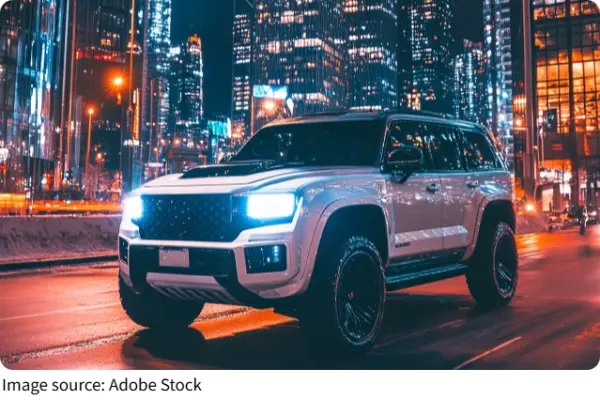
A Cohesive Design Language
A large SUV achieves its character through coordinated design rather than a single defining feature. Proportions establish the foundation, stance connects the body to the road, windows shape the cabin, wheels reinforce the profile, lighting defines key areas, and surfaces provide depth.
When these elements are carefully integrated, the result is a large SUV with a clear, balanced form that combines visual presence with practical vehicle architecture.