Scandinavian Living

Chris Isidore
| 18-11-2026
 · Lifestyle Team
Scandinavian-style interiors often combine restrained colors, natural wood, simple furniture, useful lighting, and open floor space. The practical value comes from how those elements are arranged rather than from following a fixed decorative formula.
For Lykkers, start with how the room is actually used. Seating, walking routes, tables, storage, and lighting should work first; color, cushions, plants, and decorative pieces can then complete the space.

Plan the Furniture Around Daily Life
Before choosing accessories, establish where people will sit, walk, read, and place everyday items. Measure the room and mark proposed furniture dimensions on the floor with removable tape.
This makes scale much easier to judge than relying on product photographs.
Discover How Indoor Plants Can Transform Your Home Into a Beautiful, Cozy, and Naturally Stylish Living Space Today!
Personal growth isn’t always about becoming someone new; sometimes it’s about leaving old habits behind.
How speaker placement, storage, lighting and good habits make a small space work for listening and practice.
How tidy footwear storage saves space, eases cleaning, and keeps pairs in good shape.
Want a warmer home? Explore stylish rattan furniture and decor ideas for a natural, timeless look!
Need a cozy reading nook? Choose the perfect chair for comfort, style, and quiet moments!
Start with the sofa footprint
Measure the sofa width and depth as well as the space required around it.
Where room size permits, around 75 to 90 cm is a useful starting point for a main circulation route. Smaller gaps may work in compact rooms, but test them by walking through the space normally.
Also measure doorways and tight delivery routes before ordering large furniture.
Check seat proportions before appearance
Two sofas of similar width can feel completely different.
Compare seat height, seat depth, back height, and cushion firmness. A deeper seat may suit relaxed lounging, while a shallower seat can make upright sitting easier for some people.
If possible, sit for several minutes rather than deciding after a brief test.
Keep occasional seating genuinely movable
Floor cushions can provide flexible seating when guests visit, but they also occupy circulation space.
Give them a defined storage location when they are not required. A nearby bench, low cabinet, or suitable storage area prevents them from becoming permanent obstacles.
Choose removable, washable covers if they are likely to receive frequent floor contact.
Size the rug from the seating area
Measure furniture placement before choosing the rug.
When space allows, a rug large enough to sit beneath the front legs of the sofa and nearby seating creates a more connected arrangement. A very small rug centered away from the furniture may visually divide the area instead.
Use tape to mark the proposed dimensions before purchasing.
Add a side table only where needed
A compact table beside the sofa can hold a drink, book, phone, or reading glasses.
Check reach while seated. If you need to lean far forward or twist around the sofa arm, move the table closer or choose another height.
Make sure its legs do not interfere with the normal route around the seating area.
Add Color and Texture with Control
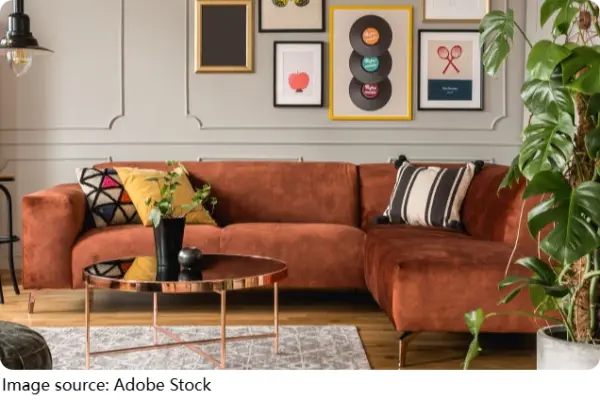
Once the layout works, Scandinavian-inspired styling can become much more flexible. Pale gray upholstery, blue-green walls, warm wood, deep green textiles, and muted gray surfaces can all sit within the same room.
The key is deciding which elements should dominate and which should remain supporting details.
Choose a restrained base palette
Start with two or three major colors already present in expensive or difficult-to-change surfaces.
For example, pale gray upholstery, warm wood flooring, and a muted blue-green wall create a workable base. Smaller accessories can introduce deeper green, charcoal, cream, or related tones.
You do not need exact color matches between separate objects.
Test blue-green paint properly
Blue-green shades can shift noticeably under changing light.
Apply samples to a large movable board or wall section and observe them during morning, afternoon, and evening conditions. Check the same samples under your normal lamps after dark.
A shade that appears softly green during daylight may look cooler under some artificial lighting.
Use texture before adding more objects
Visual variety does not require many decorative pieces.
Combine a smooth sofa with woven textiles, visible wood grain, glass, matte ceramics, or a textured rug. These material changes create contrast while keeping the number of objects manageable.
Choose finishes according to maintenance requirements as well as appearance.
Keep cushions proportional to seating
Cushions should not reduce the usable sofa to a fraction of its original width.
Start with the number needed for comfort, then add decorative cushions only if seating remains practical. Two or three contrasting cushions may provide enough color for a compact sofa.
Check care labels if the covers will need regular washing.
Give plants the right conditions
Greenery suits this palette naturally, but plant placement should follow light requirements.
Observe the intended position throughout the day before choosing a species. Light levels usually decrease significantly farther from a window, even when the room appears bright.
Use a suitable saucer or protective surface beneath containers placed on wooden furniture, and keep water away from electrical items.
Keep decorative surfaces partly empty
A side table does not need decoration across its entire surface.
If you add a vase or sculpture, leave room for objects that appear during daily use. On narrow furniture, choose stable pieces with bases appropriate to the available surface.
Fragile objects are better placed away from busy circulation routes.
Use several useful light sources
Plan lighting around activities rather than symmetry.
General lighting can support movement and cleaning, while a floor or table lamp can provide focused illumination for reading. Position switches within convenient reach and route cables away from walking areas.
During daytime, curtains or blinds can manage glare while preserving useful natural light.
A practical Scandinavian-style living room combines measured furniture, clear movement, useful lighting, restrained color, and manageable decoration. Establish the layout first, then add wood, textiles, plants, and blue-green accents only where they support everyday use.