Purple Sweet Potato Klepon

Finnegan Flynn
| 02-11-2026
 · Food Team
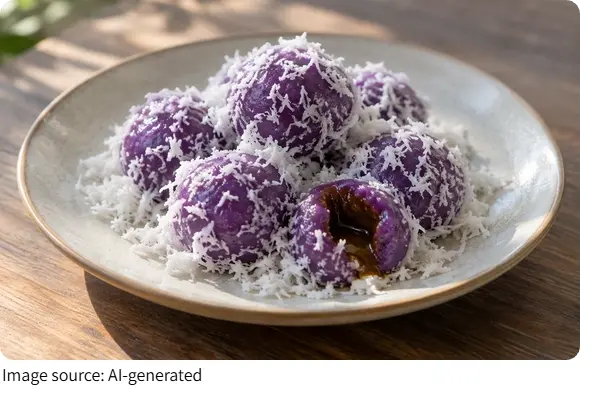
Some desserts save their best part for the first bite. Purple sweet potato klepon is a traditional Indonesian dessert made with mashed sweet potatoes and glutinous rice flour. Each ball holds a palm sugar filling and gets a coating of grated coconut after cooking.
These little treats combine chewy dough, fragrant coconut, and a warm, syrupy center. They make a good afternoon snack or a homemade dessert to share with family and friends.
Ingredients
Prepare everything before starting. The dough, filling, and coating use:
- 275 g purple sweet potatoes, peeled
- 150 g glutinous rice flour
- 1 teaspoon salt
- 1 teaspoon vanilla syrup
- 3 tablespoons water or coconut milk (45 ml)
- 80–100 g palm sugar, finely chopped, for the filling
Shrimp, eggs, curry powder, and crispy onions come together in a sweet and savory dish served in fruit shells.
A step-by-step guide to a lattice crust, a cinnamon-spiced fruit filling and a crisp, glossy top.
Enjoy golden, crispy churros coated in sweet cinnamon sugar and paired with rich chocolate sauce
How Strawberries Support Immune Function, Digestion, and Heart Health
Make creamy homemade berry ice cream with a rich texture, vibrant fruit flavor, and simple ingredients in an easy no-churn recipe
A Refreshing Homemade Drink With Fresh Carrots, Lemon, Apple, and Ginger
- 40–50 g freshly grated coconut, or unsweetened desiccated coconut, for the coating
This makes about 24 small balls, or 8 servings, and takes about 35 minutes to prepare and cook.
You will also need a steamer, a large saucepan, a mixing bowl, measuring spoons, a fork or potato masher, and a slotted spoon. Dark brown sugar can replace palm sugar if necessary.
Step 1: Steam the Sweet Potatoes
Cut the peeled sweet potatoes into cubes about 2.5 cm wide. Place them in a steamer over boiling water and cook for 10–15 minutes, until a fork slides easily through the pieces.
Transfer the cooked cubes to a mixing bowl and mash thoroughly until smooth, removing any large lumps. Let the mixture cool slightly before making the dough.
Step 2: Mix the Dough
Add the glutinous rice flour and salt to the mashed sweet potatoes. Stir in the vanilla syrup, then gradually add the water or coconut milk, starting with about 30 ml and adding more only if needed.
Knead for 2–3 minutes until the mixture forms a soft dough that holds together without sticking heavily to your hands. If it feels too sticky, add flour one teaspoon at a time. If cracks appear when rolling, add a few drops of water. Cover the dough while preparing the filling.
Step 3: Prepare the Filling
Finely chop the palm sugar into pieces about 2–3 mm wide, since small pieces fit inside the dough more easily and melt during cooking. Place the sugar in a small bowl. If using brown sugar instead, break apart any large clumps so the filling is easy to measure and distribute.
Step 4: Shape the Rice Balls
Divide the dough into about 24 portions. Roll one portion between your palms into a smooth ball about 2.5 cm wide, then press your thumb into the center to create a hollow.
Add about 1/3 teaspoon of chopped sugar, bring the dough edges together, and pinch the opening closed. Roll gently until the surface is smooth, and check for cracks or gaps that could let the filling escape. Repeat with the remaining dough.
Step 5: Boil Until Cooked
Bring a large saucepan of water to a steady boil. Carefully lower the rice balls into the water in small batches, leaving enough space for them to move freely.
The balls will sink at first and gradually rise to the surface, usually within 3–5 minutes. Once they float, cook for another 1–2 minutes, then lift them out with a slotted spoon and drain away excess water.
Step 6: Coconut Coating
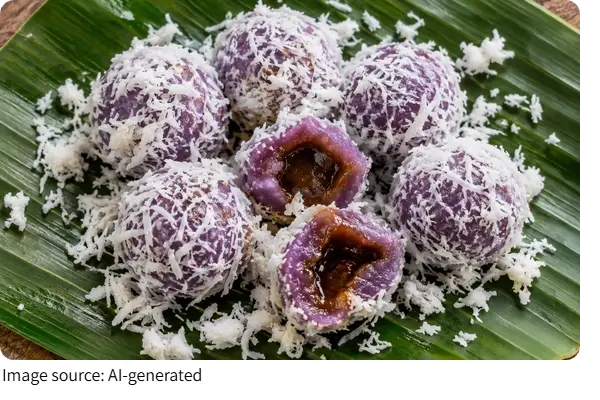
Spread the grated coconut across a shallow plate. While the rice balls are still warm and slightly moist, roll each one gently through the coconut until evenly coated. Arrange them on a serving plate and let them cool briefly before eating, since the melted sugar inside can be hotter than the outer dough.
Serving Suggestions
Klepon are best fresh, when the dough is soft and chewy and the filling is warm. Serve them with unsweetened tea or another favorite warm drink.
Store leftovers in a covered container in a cool place for up to two days. Refrigeration can make the dough firmer, so it is best to make only what we plan to eat soon.
Final Thoughts
Good klepon come down to a soft dough and a tightly sealed filling, and both get easier after the first few balls. Lykkers, which part sounds best to you: the chewy purple dough, the fragrant coconut, or the sweet surprise inside?