White Kitchens

Declan Kennedy
| 03-11-2026
 · Lifestyle Team
Hello, let's get started. You'd think a white kitchen is the safest choice, right?
It's clean, bright, and timeless. But all-white can also land flat, like a showroom that nobody actually cooks in.
The trick isn't ditching white, it's choosing the right colors to sit next to it so the room feels like someone makes Sunday pancakes there.
Why white turns icy fast
White reflects light, which is great for making a small space feel bigger. But when every surface, cabinets, counters, backsplash, is the same bright white, your eye has no place to rest. It reads as cold, almost clinical. Think of a dentist's office, spotless but not exactly inviting. The fix is contrast, and you don't need a full remodel to get it.
One pair can transform a look! See how high heels can add height, polish, and a stylish finish!
Ready to make the bathroom more striking? Bold finishes and moody details can change the whole room!
Pick the right main light with brightness, warmth, and shape in mind.
Size, material, and practical checks for choosing a freestanding tub that fits your space and habits.
Wondering which fixture suits your kitchen? Get easy tips for choosing the perfect glow!
Different materials, different rules. Here's how to wipe them down without damage.
A warm wood cutting board left on the counter, or a set of brass canisters, can break up the glare without you touching a paint can.
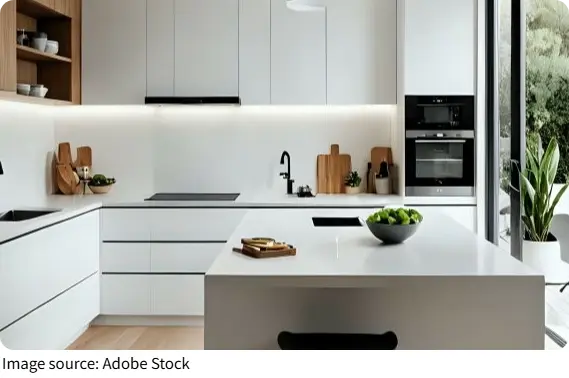
The wood that saves the room
Natural wood is the fastest way to add warmth to a white kitchen. Oak is the classic choice, and it works because its golden undertone softens the starkness of white cabinets. You can go big with open shelving in light oak, like the kind you see in farmhouse-style kitchens, or keep it small with a butcher block island top.
Even a few walnut counter stools pulled up to a white peninsula change the whole mood. The wood doesn't need to be everywhere, just present enough to feel grounded.
Green is the cozy counterpoint
If you want color but fear it'll clash, sage green is your safest bet. It sits quietly next to white and brings a bit of the outdoors in, which instantly makes a kitchen feel lived-in. Paint your lower cabinets in a muted sage, something like Benjamin Moore's October Mist, and keep the uppers white.
Or go simpler: a sage green tile backsplash behind a white range hood. For a punchier take, deep forest green on just one wall, like the one behind your stove, adds drama without overwhelming the space.
Black is the sharpener you need
A little black goes a long way in a white kitchen. It doesn't make the room darker, it makes the white look crisper and more intentional. Matte black cabinet handles are the easiest swap, and you can do it in an afternoon with just a screwdriver. If you're braver, paint the island black and keep the perimeter white.
That contrast creates a focal point, so the room feels designed, not just painted. Brass or gold fixtures also pull this off, but black reads more grounded and less flashy.
Warmth lives in the details
Color isn't only paint and wood. Your textiles and decor carry just as much weight. A patterned runner in terracotta or rust tones along the floor in front of the sink warms up the whole sightline. Linen curtains in a soft cream, instead of white blinds, add texture that softens the edges.
Even your countertop appliances matter. A cream stand mixer or a wooden utensil crock on the counter does more than you'd think. These are the small touches that make people walk in and say, "this feels nice," without knowing why.
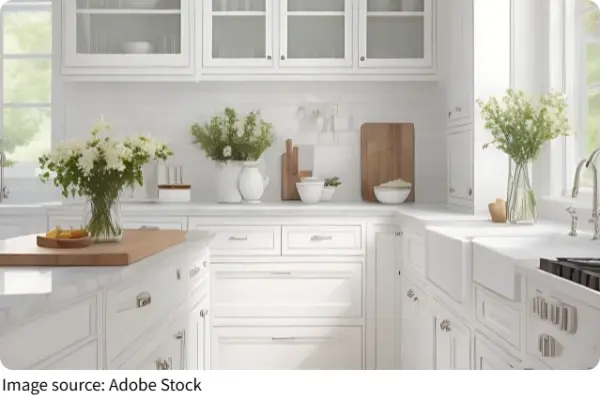
The goal isn't to abandon white, it's to give it company. Pick one or two of these ideas, maybe the wood shelves and a sage backsplash, and you'll notice the room changes instantly. Next time you're standing in your kitchen, look at the biggest white surface and ask yourself what one warm thing you could put next to it. That's all it takes to bring the heat back.