Driving Style and Safety

Nolan O'Connor
| 10-10-2026
 · Auto Team
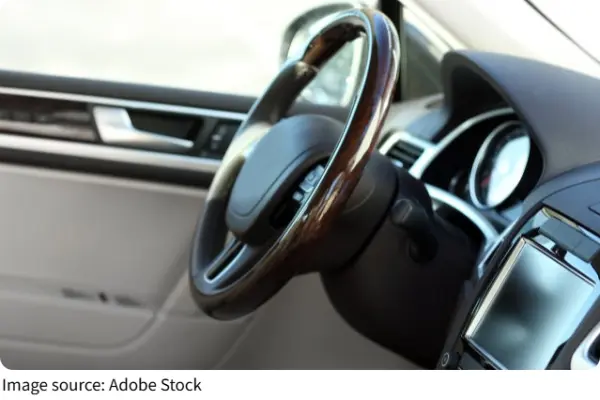
A driver’s habits can reveal a great deal about how safely a vehicle is being operated. Repeated patterns in acceleration, braking, speed selection, following distance, and lane changes can help researchers distinguish different driving styles.
A recent systematic review published in Electronics examines how these patterns are identified, what technologies are used to detect them, and how they may relate to road-safety outcomes.
Why Driving Style Matters
Driving style is different from a temporary driver condition. A style refers to recurring patterns that appear across maneuvers or trips, while conditions such as tiredness or distraction may affect behavior for a limited period.
Researchers commonly examine patterns that can be described as aggressive, defensive, or efficiency-oriented. Sudden acceleration, strong braking, unstable speed control, short following distances, and abrupt lane changes may indicate a more risk-prone pattern. More controlled speed changes, greater anticipation, and steadier vehicle handling can reflect a more cautious approach.
Heavy rain can disrupt road networks! Explore how extreme rainfall affects transport and mobility!
How convertible roof design influences comfort, storage, weight, maintenance, and everyday driving
A study of 13,706 Seattle intersections reveals how overlooked street details can distort pedestrian crash predictions.
Could smarter traffic lights make driving safer? New research explores how connected cars help motorists make split-second decisions.
A personalised warning system could help drivers regain control of automated vehicles before dangerous motorway situations escalate.
New research shows why rebuilding traffic networks after extreme rain must balance speed, capacity and crash risk.
Technology Changes the Way Driving Is Studied
Modern vehicles and mobile devices provide researchers with many ways to observe driving behavior. Smartphone sensors can capture movement and location information, while vehicle systems can provide data about speed and other operating conditions. Telematics platforms and camera-based systems add further sources of information.
These technologies allow large amounts of driving data to be examined without relying entirely on personal descriptions of driving habits. Instead, researchers can analyze measurable events and identify recurring patterns.
The review found that machine-learning approaches have become increasingly important. Traditional methods such as support vector machines, decision trees, random forests, and other classification techniques appear alongside newer deep-learning approaches. Neural networks can be used to process sequences of driving information and, in some cases, visual data.
The choice of technology still involves trade-offs. Different systems vary in cost, data quality, privacy considerations, and practical suitability for real-world use.
Connecting Driving Patterns With Safety
Recognizing a driving style is only part of the challenge. Researchers also need to establish whether a particular pattern has meaningful safety implications. The reviewed studies use several types of safety indicators. These include crashes, near-miss situations, traffic conflicts, harsh maneuvers, time-to-collision measurements, and composite risk scores. Such indicators can provide different levels of information about how driving behavior relates to potential danger.
The research generally points toward a connection between aggressive or unstable driving patterns and smaller safety margins. Frequent harsh maneuvers or abrupt changes can reduce the time available to respond when traffic conditions change.
Still, the researchers emphasize that results cannot always be compared directly. Studies may use different definitions, sensors, road environments, sample groups, and evaluation methods. A model that performs well under one set of conditions may not produce the same results elsewhere.
A More Organized Data Framework
One of the study’s notable contributions is a proposed architecture for organizing driving-related information. The framework centers on four connected elements: the driver, the trip, the driving event, and the safety event. This structure creates a clearer path from collected information to research results. A trip can contain multiple driving events, such as braking or lane changes, while safety events can be connected to relevant portions of that trip.
Why Reproducibility Is Important
Driving research often combines information from different sensors and analytical methods. Without consistent definitions and clear documentation, two studies can examine similar behaviors while producing results that are difficult to compare.
A reproducible structure could help address this problem by keeping important details connected. Information about data sources, measurement periods, feature definitions, model versions, labels, and safety indicators can remain traceable throughout the research process.
The review shows that driving-style recognition is moving beyond simple descriptions of driver habits. Sensors, telematics, machine learning, and structured databases are creating new ways to examine how people operate vehicles and how those patterns may relate to safety.
The biggest challenge is not simply collecting more data. It is making that information consistent, transparent, and useful across different studies. By connecting driving behavior with clearly documented safety indicators, future systems may become better equipped to identify risky patterns and support more informed decisions on the road.