Car Safety Gets Better!

Caroll Alvarado
| 24-09-2026
 · Auto Team
Car safety is no longer measured only by what happens when a crash occurs. New vehicles are increasingly expected to help prevent collisions, support drivers in difficult situations and provide useful protection after an impact.
Recent testing of four electric cars under stricter 2026 assessment rules highlights how manufacturers are responding to these broader demands.
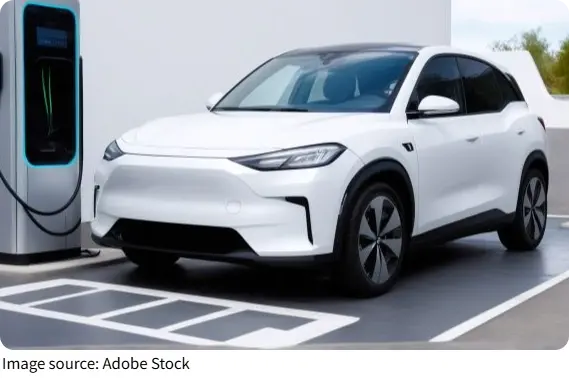
The latest group includes the CUPRA Raval, AION UT, GEELY E2 and Leapmotor B05. Three achieved five-star results, while the CUPRA Raval received four stars with its standard equipment and five stars when fitted with an optional safety package. The results show that equipment levels can make a meaningful difference to a vehicle's overall safety performance.
As robotaxis take over routine driving, a new safety question emerges: can human supervisors stay ready for the moments that matter?
A lightweight metal foam could help vehicles absorb more impact energy while reducing forces linked to serious occupant injuries.
Euro NCAP urges truck manufacturers to improve rear protection systems and reduce the risk of deadly road collisions.
European researchers are developing new technologies to help automated vehicles navigate safely through rain, fog and snow.
Could sound guide pedestrians? New audio tones may help automated vehicles communicate more clearly!
Short Trips Could Be Quietly Affecting Your Car’s Engine, Battery, Tires, and Everyday Driving Efficiency.
Safety Goes Beyond Crash Protection
Modern vehicle assessments look at several parts of the driving experience rather than focusing exclusively on crash performance. The latest evaluations consider safe driving, crash avoidance, crash protection and post-crash safety.
This means technology such as lane-departure prevention, automatic emergency braking, driver monitoring and systems that help occupants after an accident can influence the final result. The approach also gives buyers more information about how a vehicle performs before, during and after a collision. A car with strong structural protection may still have room for improvement if its driver-assistance technology performs inconsistently.
CUPRA Raval Benefits From Extra Technology
The CUPRA Raval recorded four stars when tested with its standard safety equipment. Its scores included 58% for safe driving, 66% for crash avoidance, 91% for crash protection and 95% for post-crash safety. With the optional Safety Pack, its safe-driving score increased to 72%, while crash avoidance rose to 77%. That additional equipment helped the vehicle respond more effectively to potential hazards, particularly during low-speed driving and at junctions.
The Raval also demonstrated strong physical protection during crash testing. It achieved full results in side-barrier and full-width frontal assessments, with its centre airbag contributing to occupant protection.
AION UT Delivers Balanced Performance
The AION UT achieved five stars, supported by results of 66% for safe driving, 74% for crash avoidance, 91% for crash protection and 88% for post-crash safety. Its crash-avoidance technology performed well across most scenarios. However, the vehicle's frontal monitoring system showed limitations in situations involving vehicles and motorcyclists crossing at junctions.
The assessment also highlighted the car's heavy reliance on its central display for important driving controls. Its speed-limit recognition system recorded 68% accuracy, while the lack of child-presence detection cost additional points.
GEELY E2 Scores Strongly
The GEELY E2 earned five stars, with 79% for safe driving, 72% for crash avoidance, 86% for crash protection and an impressive 95% for post-crash safety. One notable feature is its use of physical controls for important driving and infotainment functions. It also includes direct child-presence detection as standard equipment.
However, its automatic emergency braking performance varied between testing situations. The vehicle also lost points because protection for the driver's legs was not strong enough in a front-offset crash simulation. Testing involving a 10-year-old child occupant also identified an issue with the seatbelt moving partly away from the shoulder.
Leapmotor B05 Shows Strong Protection
The Leapmotor B05 completed testing with five stars. It scored 66% for safe driving, 77% for crash avoidance, 92% for crash protection and 89% for post-crash safety. Its automatic emergency braking system performed particularly well during high-speed and junction scenarios. Lane-departure prevention was also close to perfect during testing.
Crash protection was another strong point. The B05 achieved maximum results in side-barrier and side-pole impacts, while its centre airbag helped prevent harmful head contact between occupants. The vehicle does have child-presence detection, although it lacks an adaptive restraint system designed to accommodate different occupant sizes.
What Buyers Can Learn
These results underline why a vehicle's overall star rating should not be viewed in isolation. The equipment fitted to a particular version can influence performance, especially when advanced safety technology is offered as an option. The testing also shows how modern cars combine physical protection with electronic assistance.
The latest results demonstrate how vehicle safety is becoming increasingly comprehensive. Strong crash protection remains essential, but modern cars are also being judged on their ability to detect hazards, assist drivers and provide protection throughout different stages of an emergency.
The four vehicles tested show different strengths and weaknesses, from advanced collision-avoidance technology to structural protection and driver-interface design. For consumers, those details provide useful guidance when comparing equipment levels and deciding which safety features matter most in a new car.