How Camels Beat the Heat

Mukesh Kumar
| 16-10-2026
 · Animal Team
Deserts can become extremely hot during the day and surprisingly cool after sunset, while water may be scarce for long periods. Camels are well adapted to these challenging conditions.
Their survival does not depend on one extraordinary feature. Instead, they combine flexible body-temperature control, efficient water conservation, protective fur, and practical behaviors that help them cope with desert life.

Flexible Body Temperature
One of the most important parts of a camel's heat strategy is its ability to tolerate changes in body temperature. Unlike humans, who normally maintain a relatively narrow internal temperature range, camels can allow their body temperature to rise during the hottest hours of the day.
Tracking thousands of animals shows that wildlife responds not only to roads and cities, but also to people themselves.
New fossil DNA shows the so-called American cheetah was actually a puma relative with an unusually flexible lifestyle.
What does your cat see outside? Find out why even ordinary window views can be exciting!
Is your cat always sleeping? Here is why
Thinking about keeping a cat and rabbit together? Start with these important steps!
Why does a kitten tilt its head at something new? The reason is more curious than cute!
This flexibility becomes especially useful when a camel is dehydrated. Under such conditions, its body temperature may fluctuate by several degrees between night and day, reducing the need to lose heat through sweating.
Instead of using water to keep its temperature nearly constant, the camel stores some heat during the day and releases it when the surrounding air cools. This strategy helps conserve water, although camels still need evaporative cooling when heat loads become too great.
Saving Water During Heat
A camel's ability to conserve water is just as important as its tolerance for heat. When water is scarce, several processes help reduce unnecessary moisture loss.
Camels can tolerate greater dehydration than many other large mammals, although they still need water and can suffer from severe dehydration.
Sweating is another important part of their survival strategy. Camels do sweat when necessary, but their ability to tolerate a rising body temperature can delay the need for evaporative cooling. This means less water is lost during periods of intense heat.
Fur That Helps With Heat
A camel's thick coat may seem like a disadvantage in a hot desert, but it provides valuable protection against intense sunlight.
The fur acts as insulation, reducing the rate at which heat from solar radiation reaches the skin. This can help limit the amount of heat the camel must later lose through sweating.
Coat thickness varies across the body, and the insulating effect depends on conditions such as sunlight, air temperature, and wind. The coat does not prevent overheating, but it can reduce heat gain during strong sun exposure.
At night, when desert temperatures fall, the same insulation helps slow heat loss from the body. The coat is therefore useful in both hot and cool conditions.
Behavior Matters Too
Physical adaptations are only part of the story. Camels also adjust their behavior to changing desert conditions.
During especially hot periods, they may reduce unnecessary activity or position themselves to limit exposure to intense sunlight. Resting and avoiding excessive exertion can help reduce the amount of heat their bodies produce.
Their broad, padded feet spread their weight over a larger area, helping them walk across loose sand without sinking as deeply as animals with narrower hooves.
Long legs keep much of the body farther from the hot ground, where temperatures can be particularly high. Together, these features help camels move through desert terrain while managing the physical demands of heat and uneven surfaces.
Why These Adaptations Work Together
No single feature explains how camels cope with desert heat. Their success comes from several systems working together.
Consider a camel traveling on a hot, dry day. Its coat slows heat gain from the Sun, while its body temperature can rise without immediately triggering heavy sweating. Its kidneys and digestive system conserve water, and its broad feet make walking across sandy terrain easier.
When the air cools after sunset, the camel can release some of the heat it stored during the day. If water becomes available, it can replace lost fluids, but its adaptations help it endure periods when drinking is not possible.
These advantages work together to reduce water loss and help the camel remain functional under demanding conditions.
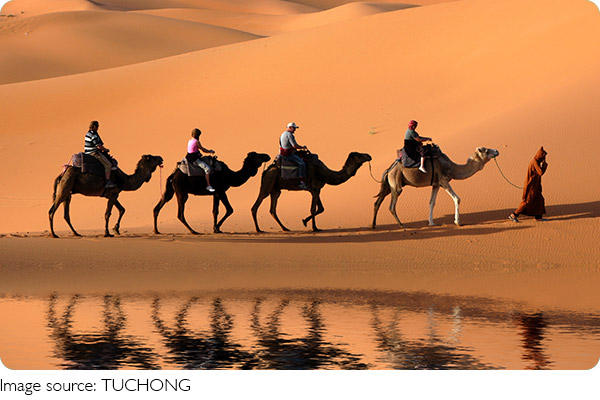
Camels survive desert heat not because they are immune to it, but because their bodies manage heat and water unusually well. Their changing body temperature, insulating coat, efficient water conservation, and movement adaptations all contribute to that ability.
The most surprising part is that some features that seem unsuitable for a hot climate, such as thick fur and the ability to let body temperature rise, are exactly what help camels conserve precious water.
How do camels stay cool? | Scienticious - Episode 8
Video by TRT World