Rhino Horn Science

Nolan O'Connor
| 08-09-2026
 · Animal Team
Lykkers, a rhinoceros is instantly recognizable by the impressive structure rising from its head.
Although commonly called a horn, this feature differs significantly from the horns found in many other mammals.
Made primarily of keratin, it demonstrates how nature can transform a familiar biological material into a highly specialized structure.
A Unique Kind of Horn
Many mammals with horns have structures supported by a bony core. A rhinoceros horn is different because it does not contain a bony core. Instead, it consists primarily of densely packed keratinized material produced by specialized tissue in the skin.
Keratin is a strong structural protein also found in hair and fingernails. This similarity makes the rhinoceros horn comparable to a giant nail in terms of its basic material, but its organization and development are distinctly adapted to the rhinoceros.
How Do Polar Bears Survive The Freezing Arctic? Their Amazing Natural Outfit Reveals A Hidden Survival Secret!
How Do Elephants Remember Water, Family, and Old Paths for Years? Their Memory Is Truly Amazing!
Explore the diverse habitats, diets, behaviors, movements, and adaptations that shape lemur life
Your Cat May Not Need Extra Warmth! Simple Winter Care Mistakes We Often Make Without Realizing It!
Why Do Macaws Form Lifelong Bonds and Learn to Copy Human Speech?
Discover how sea otters thrive in coastal waters through unique adaptations, feeding skills, and tool use
How the Horn Develops
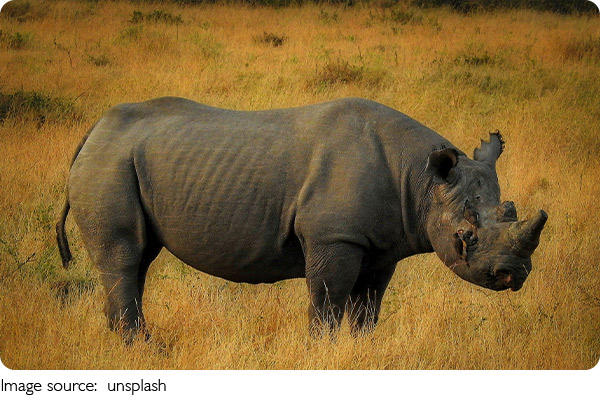
The horn grows from specialized tissue at its base. New cells are produced within this growth region and become increasingly filled with keratin as they move outward. Over time, this process builds the dense, pointed structure visible above the animal's head.
Growth can continue throughout the animal's life, although the rate varies according to species and individual. Some rhinoceroses can develop front horns exceeding one meter in length.
A Structure That Can Regrow
A damaged rhinoceros horn can gradually regrow when the tissue responsible for its development remains intact. Because the horn is primarily keratinized material rather than a solid bony structure, new material can form from the base and replace the lost portion over time.
This provides another useful comparison with fingernails, which also grow from specialized tissue. However, the two structures are not identical and should not be considered biologically equivalent.
Different Species, Different Horns
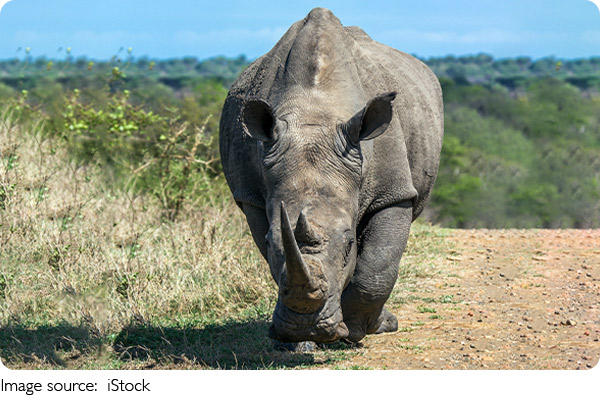
Rhinoceros species vary in the number, shape, and size of their horns. Some species generally have two horns positioned one behind the other, while another typically has a single horn.
These differences reflect the distinctive evolutionary histories of the various rhinoceros species. Horn characteristics can also vary among individual animals, creating further differences in appearance.
A Functional Feature
The horn is not simply an identifying feature. Rhinoceroses can use it during interactions with other individuals, including physical displays and encounters. It can also assist with activities involving vegetation and the surrounding environment.
Its combination of strength, durability, and continued growth makes it a highly specialized feature of rhinoceros anatomy.
What the Horn Reveals
The rhinoceros horn offers an excellent example of biological specialization. Keratin, a material found in several familiar animal structures, forms a powerful and distinctive feature when organized through the rhinoceros's specialized growth process.
Studying the horn also helps us understand that similar biological materials can serve very different purposes depending on how they develop and are arranged.
A Remarkable Natural Feature
The rhinoceros horn may look simple at first glance, but its biology is remarkably sophisticated. Its keratin-based composition, specialized growth region, ability to regrow after certain types of damage, and variation among species all contribute to its unique character.
Lykkers, the next time you see a rhinoceros, look beyond the impressive shape of its horn. It is a fascinating example of how nature can turn a common biological material into a structure perfectly suited to an animal's way of life.