Electric Cars Gain Momentum

Finnegan Flynn
| 28-08-2026
 · Auto Team
Electric vehicles continue to move deeper into the mainstream despite economic uncertainty, policy changes and an unsettled global energy market.
The latest global outlook for electric mobility shows that EV adoption is being driven by several forces at once: falling technology costs, expanding charging networks, growing battery production and stronger integration of software and artificial intelligence into vehicles.
At the same time, affordability, manufacturing concentration and trade tensions remain important obstacles.
EV Sales Keep Rising
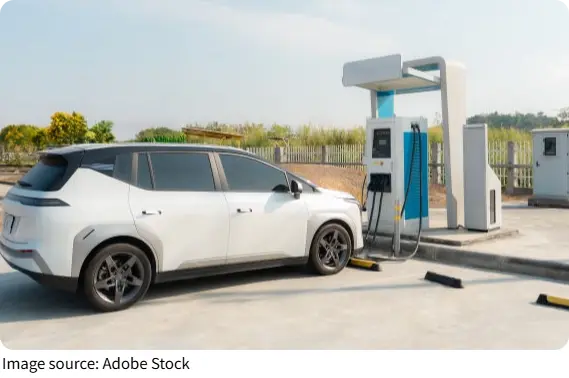
Electric cars are expected to account for close to 30% of global car sales in 2026.
That would represent another major step forward for a market that has expanded rapidly over the past several years. Growth is not happening at the same pace everywhere. Some countries continue to see very strong demand, while others are experiencing slower adoption because of changes in incentives, high vehicle prices or weaker charging infrastructure.
UK carmakers: trade missions to China, US, Germany, Türkiye.
European car sales gained momentum in H1 2026, with EVs taking a significantly larger share of new registrations.
Electric cars gained ground across Europe in early 2026, while charging networks expanded and combustion models lost market share.
Energy markets are shaky, and oil dependence is costly — why are EVs back in the spotlight?
German auto associations back a standard EU digital label to simplify car choices.
EU car recycling rules: more recycled materials, easier dismantling and reuse.
Even so, the global direction remains clear: electric vehicles are taking a larger share of new-car sales. The market is no longer driven only by climate policy. Energy security, fuel costs, technology improvements and consumer choice are becoming equally important.
Affordability Becomes Crucial
Price remains one of the biggest factors determining how quickly EV adoption can spread. Electric cars have historically carried a higher purchase price than comparable combustion models, even when lower running costs are considered. That gap is narrowing in some markets as battery costs fall and manufacturers introduce smaller, less expensive models.
Competition is also increasing. As more manufacturers enter the EV market, pressure is growing to reduce prices, improve efficiency and offer longer driving ranges without making vehicles significantly more expensive.
The availability of affordable models may determine whether EV adoption continues to expand beyond wealthier consumers and early adopters.
Batteries Drive the Transition
Battery technology remains at the heart of electric mobility. Demand for EV batteries continues to grow alongside vehicle sales, encouraging manufacturers to increase production and invest in new chemistries.
Much of the industry’s attention is now focused not only on capacity but also on charging speed, cost, durability and supply-chain security. Ultra-fast charging batteries are becoming an important area of development.
The goal is to reduce one of the most persistent concerns surrounding EV ownership: the time required to recharge during long trips. If charging times continue to fall, the practical difference between refuelling a conventional vehicle and charging an EV could become much less significant.
Charging Networks Expand
The growth of electric cars depends heavily on charging infrastructure. Public charging networks are continuing to expand in major markets, while more homes and workplaces are also being equipped with chargers. However, deployment remains uneven.
Urban areas and wealthier regions often have much better access than rural communities or emerging markets. This means the number of chargers alone does not tell the full story. Location, reliability, charging speed and grid capacity all matter.
A successful charging network needs to make drivers confident that they can recharge when and where they need to, not simply increase the number of charging points on paper.
Cars Become Software Platforms
The electric transition is also changing what a car actually is. Modern EVs increasingly depend on software for battery management, navigation, driver assistance, entertainment and energy efficiency. Software-defined vehicles can receive new functions through updates without major physical changes to the car. This gives manufacturers more flexibility but also creates new challenges involving cybersecurity, data privacy and long-term software support.
Artificial intelligence is becoming part of this shift. AI can be used to improve route planning, predict battery demand, optimise energy consumption and support increasingly advanced driver-assistance systems.
Vehicle-to-Grid Gains Attention
Another emerging technology is vehicle-to-grid, or V2G. Instead of treating an electric car battery only as a device for storing energy for driving, V2G technology allows electricity to flow back from the vehicle into a home or power grid.
In theory, millions of parked EVs could become a distributed energy-storage system. Vehicles could charge when electricity demand is low or renewable generation is abundant, then return some energy when the grid is under greater pressure.
The technology is still developing, but its potential becomes more significant as the number of electric vehicles grows.
Manufacturing and Trade Matter
The EV transition is increasingly linked to industrial policy. Countries are competing for battery factories, vehicle assembly plants and access to critical materials. Manufacturing remains highly concentrated in a limited number of markets, creating concerns about supply-chain dependence. Trade measures, subsidies and local production requirements are therefore becoming more influential in determining where electric cars are built and sold.
This adds another layer of uncertainty. EV demand may continue to rise globally even as individual markets become more fragmented by tariffs and different industrial policies.
Energy Markets Add Pressure
The broader energy situation is also affecting the EV market. The ongoing energy crisis linked to conflict in the Middle East has renewed attention on fuel security and exposure to oil-price volatility.
Electric vehicles can reduce dependence on petroleum for road transport, but greater electrification also increases the importance of power systems and electricity generation.
As EV numbers rise, their impact on both oil demand and electricity consumption becomes increasingly significant.
A Broader Technology Shift
The transition to electric vehicles is no longer simply a competition between batteries and internal-combustion engines.
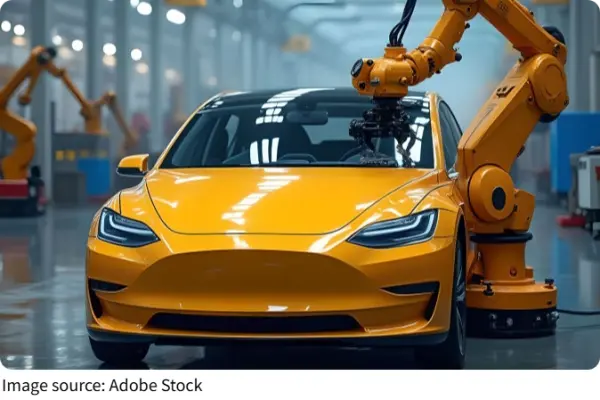
It is becoming a wider transformation involving charging infrastructure, artificial intelligence, software, autonomous driving, energy storage and global manufacturing.
The strongest signal from the current market is that electric mobility continues to expand even in an uncertain environment. The pace will differ between countries, but improvements in batteries, charging, affordability and vehicle technology are pushing EVs further into the centre of the global automotive industry.