Edge of History

Ravish Kumar
| 28-09-2026
 · Travel Team
Hello, Lykkers! High on a plateau in eastern Türkiye, the medieval city of Ani sits quietly at the edge of a deep river gorge.
Once a thriving stop on the Silk Road, it is now an open-air museum of weathered stone, half-standing walls, and wide grassy spaces where a city of thousands once stood.
Visitors often come expecting a quick photo stop and leave wishing they had more time. The site covers roughly 5 square kilometers, so a little planning helps. Here are seven places worth seeking out, along with practical notes and estimated costs to make your visit smoother.
Plan Your Trip Before You Go
Ani is about 44 kilometers east of Kars, and most visitors reach it by taxi, private car, or a minibus tour from the city. A shared minibus tour typically costs around US$8–10 per person and often includes transport plus a few nearby stops. Hiring a taxi for the day runs roughly US$60–80 depending on your negotiation and how many stops you make.
Discover scenic lakeside dining, Swiss specialties, fresh fish, Mediterranean flavors, and international cuisine around Lake Zurich
7 Breathtaking Places to Discover Around Tre Cime di Lavaredo
This French Town Looks Too Beautiful to Be Real: 7 Colmar Wonders You Must See!
Black Sea Beauty Uncovered: 7 Incredible Şile Sights That Look Too Good to Be Real!
Discover Kuching, a charming Sarawak city filled with riverside scenery, cultural heritage, local food, and Bornean experiences.
Discover Melaka River, a historic waterway offering scenic cruises, heritage views, and a relaxing way to explore the heart of Melaka.
A private transfer service from Kars to Ani starts from about US$35. The site is generally open daily from 8:00 to 17:00, with the ticket office closing around 16:30. Entry is approximately $8, which comes to about US$9. Spring and autumn offer the most comfortable walking weather; summer can be hot and exposed, and winter snow sometimes makes access difficult. Bring sturdy shoes, water, and snacks, as there are no proper facilities inside the site.
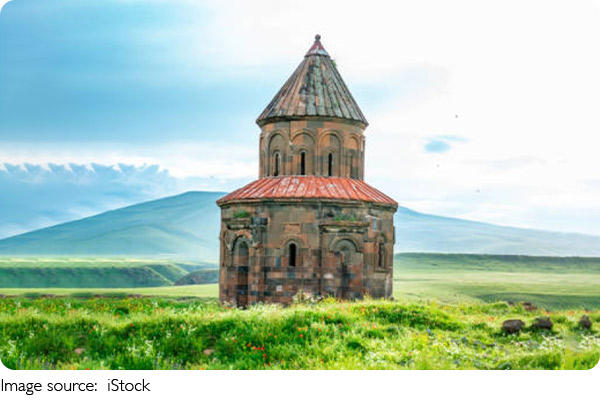
The Lion Gate and City Walls
The main entrance to the ancient city is the Lion Gate, named for a weathered lion relief carved into the stone. Passing through it gives you a real sense of entering a fortified place. From here, the triple walls stretch for over 1.5 kilometers and rise up to 10 meters in places.
Walking along the walls is one of the best ways to grasp how large Ani once was. The Middle Gate, sometimes called the Lion Gate, was the city's most magnificent entrance, and you can still spot an inscription nearby.
Menuçehr Mosque
Perched near the cliff edge, the Menuçehr Mosque is considered one of the oldest mosques in Anatolia, built in the 11th century. Its most striking feature is the octagonal minaret, decorated with geometric patterns and still largely intact. The mosque itself has a broken roof, but the interior ceiling carries rich Seljuk motifs that are worth a look. The position of the mosque gives you sweeping views over the gorge and the surrounding plateau.
EBUL MANUCEHR CAMİİ
The Silk Road Bridge Viewpoint
Below the plateau, a single-arch stone bridge still spans the river gorge. Built in the 11th or 12th century, it is a remnant of the trade routes that once made Ani wealthy. You cannot easily walk down to it, but the viewpoint at the cliff edge is one of the most dramatic spots in the entire site.
From here you look across to the opposite bank and trace the old route disappearing into the landscape. It is a good place to pause and imagine the caravans that once crossed here.
The Cathedral of the Redeemer
Ani's Great Cathedral is the best-preserved building in the ruins. Its foundations were laid in 990, and it was completed in 1001. The architect, Tiridat, also worked on a major building in Istanbul. The cathedral is built from red tuff stone and has a stepped floor with sturdy columns supporting arches.
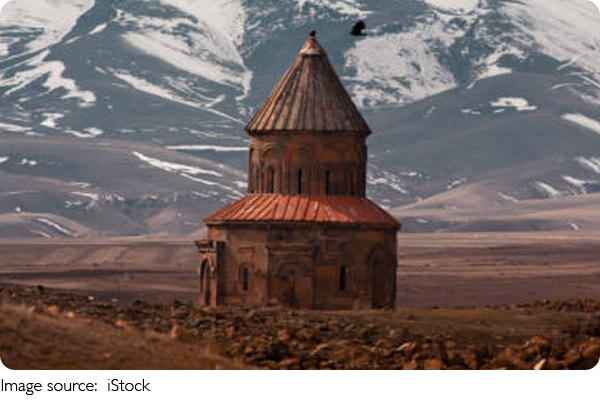
Nearby, the chapel of the Redeemer is a circular structure that lost half its form to a lightning strike long ago, yet the remaining half still stands in a striking, almost improbable way.
Cathedral
The Rock-Cut Dwellings and Cave Paths
Beyond the main standing structures, paths lead down toward the gorge where dwellings were carved directly into the soft volcanic rock. These cave spaces give a different perspective on daily life in Ani, showing how the landscape itself was used for shelter. Exploring these paths requires care, as the ground is uneven and the drop toward the river is steep. But for curious visitors, this quieter corner of the site offers a more intimate encounter with the city's past.
Final Thoughts
Ani rewards unhurried exploration. The site is larger than many visitors expect, and the scattered ruins mean you will do a fair amount of walking. Start early, carry what you need, and give yourself at least three to four hours to see the highlights without rushing. Budget roughly US$45–90 for the day, covering entry and transport, though shared minibus tours can bring that down considerably.
Whether you come for the history, the architecture, or simply the strange beauty of a lost city on the edge of a gorge, Ani offers something that stays with you. Plan ahead, wear good shoes, and let the place unfold at its own pace.