Seagull Street Smarts

Naveen Kumar
| 09-10-2026
 · Animal Team
A seagull may look like a carefree coastal bird searching for an unattended lunch, but gulls are adaptable, observant, and surprisingly skilled at living around people. For Lykkers, learning their habits makes seaside walks much more interesting!
The secret is simple: watch them, respect their space, and never turn your snack into a negotiation.
Meet The Clever Gull
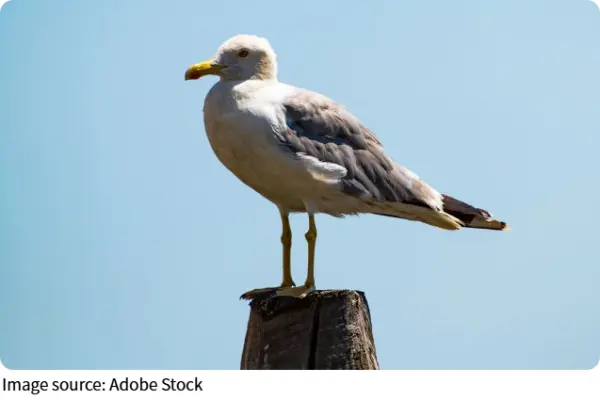
Before calling every gray-and-white bird near the sea a seagull, there is something fun to know: seagull is an informal name covering many gull species. They also live far beyond beaches.
They are not only seaside birds
Gulls are strongly associated with coastlines, yet many species spend plenty of time around lakes, rivers, fields, reservoirs, rooftops, and cities. If food and suitable resting areas are available, a gull may be perfectly satisfied far from crashing waves.
From whales to bears, who rules Glacier Bay? The answer may surprise you!
Whales are basically the opera singers of the ocean, and their songs travel farther than you'd ever expect.
Cats have a whole vocabulary and most of us completely miss it. Here's what science says they're actually trying to tell us.
Turns out apes might have more to say than we think, and scientists have the wild experiments to prove it.
Meet the tiny engineers who live below your feet, building tunnels like they have a construction deadline tomorrow.
From glowing jellyfish to zombie worms, the deep sea is basically nature's wildest haunted house.
That is why you might hear their unmistakable calls above a shopping area or parking lot and wonder whether the ocean secretly moved closer overnight.
When you see gulls inland, watch what they are doing. Some may search grassy areas for small creatures. Others follow human activity because they have learned that food sometimes appears around busy places.
Try keeping a small bird note on your phone. Record location, weather, number of gulls, and what they were doing. After several observations, you may begin noticing patterns rather than seeing them as random noisy visitors.
Learn their snack detective skills
Gulls are excellent observers. Around people, they may watch where food appears, which tables are unattended, and whether someone seems likely to share.
This intelligence creates one of the most practical gull rules: do not deliberately feed them. Feeding encourages birds to associate people with easy meals and may increase bold behavior. It can also encourage groups to gather where conflict becomes more likely.
If you are eating outdoors, keep food close and containers secured. Finish your meal before wandering away to take photos. Put leftovers in a closed bin where available.
A gull staring at your lunch may look deeply persuasive. Remember that you are dealing with an experienced professional.
Read their warning signals
Gulls become especially protective around nesting areas and young birds. If you unknowingly approach too closely, an anxious gull may call loudly, circle overhead, or swoop near you.
Do not challenge it or wave your arms wildly. Move calmly away from the area and give the birds more space. If possible, change your route entirely.
You should also avoid approaching young gulls that appear alone. Parents may be nearby and watching closely. A young bird on the ground is not automatically abandoned.
Observation from a respectful distance is usually the best choice. If a bird appears genuinely injured or trapped, contact a local wildlife rescue organization rather than trying to manage the situation yourself.
Watch their clever feeding behavior
Gulls have flexible diets and use different strategies to find food. Depending on species and location, they may eat fish, insects, marine creatures, eggs, seeds, or discarded human food.
Watch a gull near water, and you may see it searching the surface, walking along the shore, or investigating objects with impressive concentration.
Share Space Like Pros
Gulls and people often meet in the same places, so peaceful coexistence depends on small habits. You do not need to fear gulls or treat them like comedy villains. You'd simply need to understand why they approach and make your own behavior less rewarding to overly confident visitors.
Master the outdoor lunch setup
If you are eating near gulls, arrange your meal before opening everything. Keep containers close, avoid leaving food unattended, and clean crumbs when finished.
For a picnic, bring reusable containers with secure lids and a bag for rubbish. Pack everything away before going for a walk. This takes only a minute and prevents your picnic area from becoming an accidental gull buffet.
If a gull approaches, stay calm and keep your food secure. Do not toss food away simply to make the bird leave. That teaches exactly the wrong lesson: approaching people produces snacks.
Your lunch should remain lunch, not wildlife training material.
Become a gull photographer
Gulls are excellent photography subjects because they offer flight, movement, reflection, and expression. You can practice wildlife photography without needing a remote expedition.
For flying gulls, use a fast shutter setting if your camera allows manual control. Track the bird smoothly rather than moving the camera suddenly. For standing gulls, lower your viewpoint slightly while maintaining distance. This can make the bird appear more connected to its surroundings.
Look for interesting moments: a gull facing strong wind, landing near water, calling to another bird, or reflected on a wet surface.
Never lure a gull closer with food for a photograph. A natural behavior shot is more meaningful anyway.
Try a ten-minute behavior challenge
Choose a safe place where gulls are visible and watch them for ten minutes. Do not interact. Simply observe.
Count how many different behaviors you see. Walking, calling, preening, flying, resting, searching, chasing, landing, and watching people may all appear.
Then choose one bird and follow its actions with your eyes. Where does it look before moving? Does another gull change its behavior? Does it react to people differently from other birds?

Seagulls are an easy opportunity to observe intelligent wildlife almost anywhere. However, be sure to keep your food secure, respect their nesting areas, photograph them from a distance, and pay close attention to their individual behavior.