Cosmic Stone Mystery

Naveen Kumar
| 21-10-2026
 · Science Team
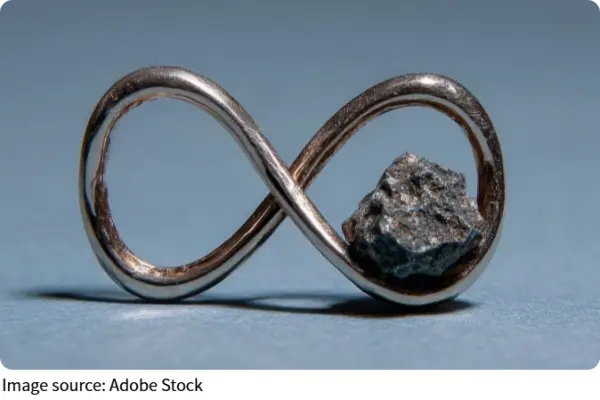
Have you ever picked up a strange rock and wondered if it came from outer space? Every year, thousands of extraterrestrial stones fall to Earth — some landing quietly in deserts, forests, or even backyards.
These mysterious “visitors” are called meteorites, fragments of small celestial bodies that survived a fiery journey through our atmosphere. Unlike ordinary rocks we step on every day, meteorites carry the history of our solar system’s birth and evolution. Let’s explore how these cosmic travelers differ from the ordinary stones around us.
What Exactly Is a Meteorite?
A meteorite begins its story far beyond our skies. It might be a fragment of an asteroid, a grain of dust from a comet, or debris from the Moon or Mars created by ancient collisions. These fragments drift through space for millions or even billions of years until Earth’s gravity pulls them in.
Discover how scientists are using innovative methods to find extraterrestrial life.
Arctic microbes secretly generate electricity as ice melts.
How Living Concrete Can Automatically Fix gaps and Last Longer!
How Liquid Solar Ink Could Turn Windows and Fabric Into Energy Sources.
Listen Up: Your Backyard Trees Could Be Forecasting Storms!
Discover how mountains, rivers, and canyons shape our world.
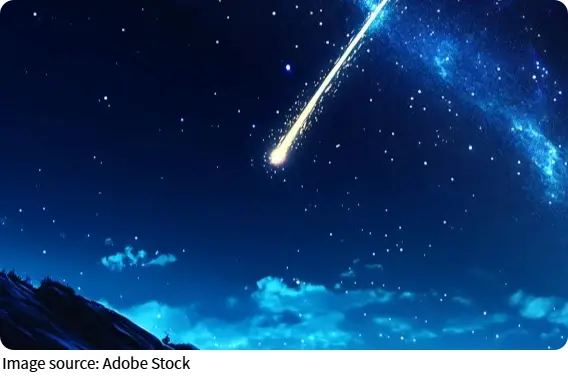
As they rush into our atmosphere at speeds between 11 and 72 kilometers per second, friction heats their surface to several thousand degrees Celsius. The intense heat melts their outer layer, which then cools rapidly, forming a thin, dark, glassy shell called a “fusion crust.”
While most space fragments burn up completely as shooting stars, some survive the descent and land on the ground. Scientists estimate that around 50,000 tons of space material reach Earth each year, though only a small portion is ever recovered. Many fall into oceans or remote areas, remaining undiscovered.
From Birth to Structure: How Meteorites Differ from Ordinary Rocks
At first glance, meteorites may seem similar to common Earth rocks, but the differences are profound. From their origin to their composition and structure, meteorites reveal clues about the earliest days of the solar system. Scientists usually identify them based on four main aspects: origin, composition, structure, and appearance.
1. Origin: One Born on Earth, the Other in Space
Earth rocks form through geological processes like volcanic activity, sedimentation, and metamorphism. For instance, granite develops from slowly cooled magma, while limestone comes from marine sediments.
Meteorites, however, are remnants from the solar system’s earliest moments, roughly 4.5 billion years ago — even older than Earth’s oldest rocks. They preserve the original material from which planets were formed, acting as “time capsules” that help us understand how the solar system evolved.
2. Composition: A Recipe Only Space Could Make
Earth rocks mostly contain oxygen, silicon, aluminum, and iron. Meteorites, by contrast, often hold minerals and elements rare or even nonexistent on Earth.
• Iron meteorites contain more than 90% metal, mostly a mix of iron and nickel, much higher than the metallic content in ordinary rocks.
• Stony meteorites can include unique minerals like troilite (iron sulfide) and taenite — materials formed under extreme conditions found only in space.
• Carbonaceous chondrites are especially fascinating because they contain organic compounds such as amino acids, which scientists study to understand how life might have begun in the solar system.
Meteorites also differ in their isotopic makeup, particularly in oxygen isotopes. These variations show that they originated in distinct regions of the solar system, unlike any rocks formed on Earth.
3. Structure: The “Cosmic Fingerprints” Within
Meteorites display internal structures shaped by cosmic conditions and slow cooling processes.
• Widmanstätten pattern — found in iron meteorites, this beautiful crisscross pattern forms as iron and nickel slowly cool over millions of years. It becomes visible only after chemical treatment and doesn’t appear in any Earth rock.
• Chondrules — small spherical grains inside stony meteorites, formed from molten droplets that quickly cooled in the early solar nebula. They look like tiny beads frozen in time.
• Regmaglypts — thumbprint-like depressions caused by air resistance as the meteorite blazes through the atmosphere. These marks are one of the most recognizable external clues of a meteorite’s fiery past.

4. Appearance: Dark Crust, Thumbprints, and Magnetism
Meteorites often have a black or dark brown fusion crust that forms when the surface melts during entry and cools instantly. This crust is smooth and shiny when fresh but may weather over time. Their surfaces sometimes feature shallow, rounded pits — the “thumbprints” mentioned earlier.
Many meteorites also attract magnets because of their high metal content, especially iron and nickel. This makes magnetism a quick first test for enthusiasts trying to identify a possible meteorite. Most Earth rocks, except a few with magnetic minerals, show no such reaction.
Why Identifying Meteorites Matters?
Finding and studying meteorites is more than a hobby — it’s a way to understand our origins. Meteorites are the only solid pieces of otherworlds we can actually hold. Through them, scientists uncover how planets formed, how chemical elements combined, and even whether life could exist elsewhere.
For example, studying isotopes within meteorites helps scientists reconstruct the chemical environment of the early solar system. Research on Martian meteorites, meanwhile, offers hints about whether liquid water once flowed on the Red Planet.
Each meteorite is like a cosmic message written in stone — a small but powerful reminder of our connection to the universe.
Touch the Cosmos
Lykkers, next time you notice a dark, heavy rock with an unusual texture, take a closer look — you could be holding a fragment of the stars! Meteorites remind us that Earth is part of a much bigger system, constantly exchanging matter and energy across space.
Imagine if a meteorite landed near your home — would you keep it as a tiny piece of the cosmos or hand it over for scientific discovery? Maybe the next “visitor from space” is waiting nearby, ready to share its story of the universe.